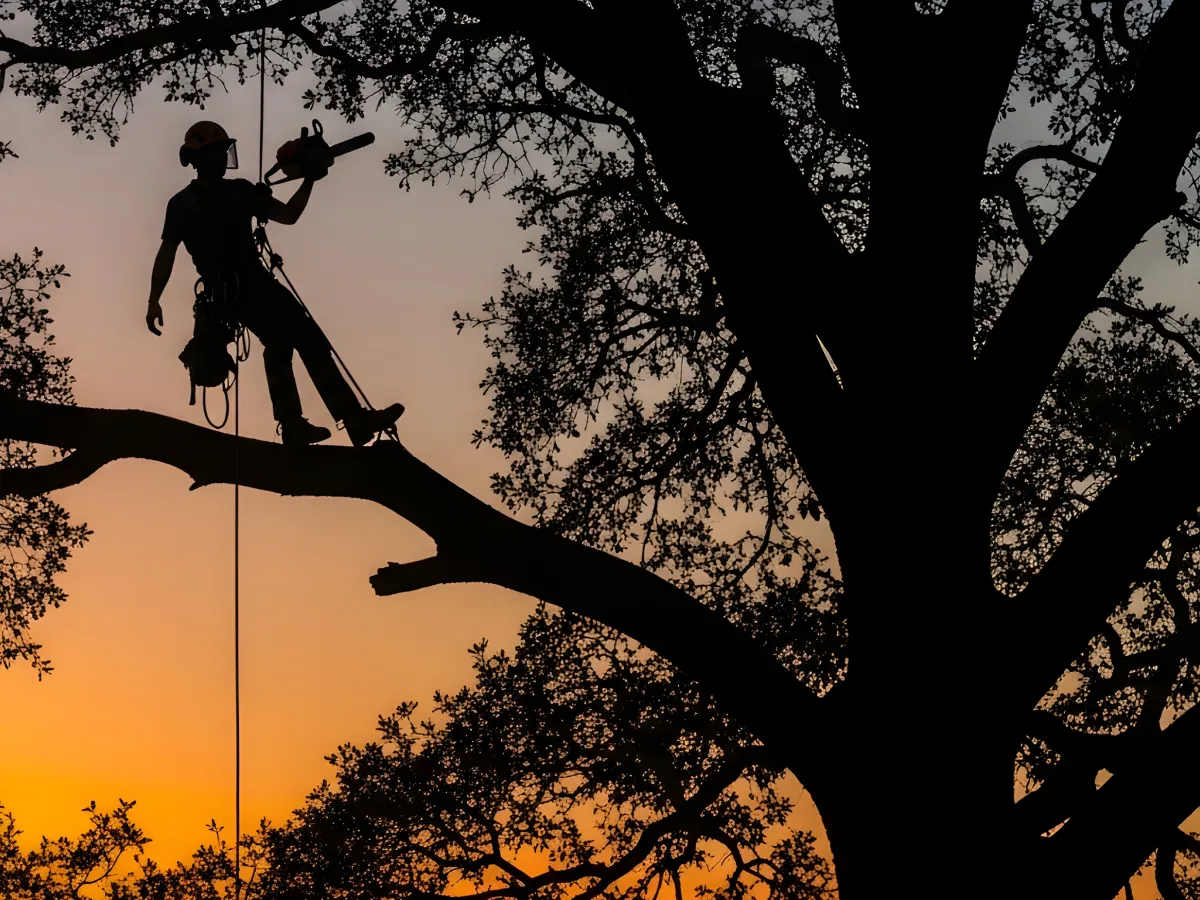
Assess the Branch and Evaluate Potential Hazards Before You Begin
Before you touch a single tool, take time to thoroughly evaluate the branch you plan to remove. Start by examining its diameter. Branches thicker than three inches require specialized cutting techniques and equipment, while anything approaching six inches or more should prompt serious consideration of professional help. Look up and trace the entire length of the branch to identify where it connects to the trunk and whether it supports smaller secondary branches that could fall unexpredictably.
Next, scan the area below and around the branch for potential targets. Power lines pose an immediate danger and require utility company involvement before any cutting begins. Evaluate proximity to structures such as roofs, fences, windows, and vehicles. In Tyler, TX and surrounding areas, summer storms often leave branches leaning precariously over homes, and removing them without proper assessment can result in costly damage. Check for signs of decay, hollow sections, or cracks that might cause the branch to split unexpectedly during cutting.
Finally, consider the branch’s weight distribution and natural lean. A branch leaning heavily toward your house will fall in that direction unless you employ rigging techniques to control its descent. If your assessment reveals multiple risk factors, overhead obstacles, or structural concerns, contact our team for a safer solution.
Gather the Right Tools and Safety Gear for Tree Limb Removal
Proper equipment makes the difference between a controlled removal and a dangerous accident. For most homeowner-scale jobs, you will need a sharp hand saw or bow saw rated for green wood, a sturdy ladder with non-slip feet, work gloves with grip reinforcement, safety glasses or a face shield, and a hard hat to protect against falling debris. If the branch sits higher than ten feet, consider a pole saw with an extended reach to keep you safely on the ground.
Your safety gear is non-negotiable. Eye protection shields against sawdust and small twigs that fly during cutting. Gloves prevent blisters and splinters while giving you better control of your tools. A hard hat protects your head if a smaller branch breaks loose unexpectedly. Long sleeves and long pants guard your skin from scrapes, and steel-toed boots offer protection if a cut section falls near your feet.
Avoid the temptation to use a chainsaw unless you have formal training and experience. Chainsaws demand specialized safety equipment, including chaps, and they increase the risk of kickback injuries. For larger jobs that require a chainsaw, our tree trimming service professionals bring the expertise and equipment to complete the work without putting you at risk. Investing in the right tools for small jobs and knowing when to call in professionals for bigger ones protects both you and your property.
Use the Three-Cut Method to Prevent Bark Tearing and Damage
The three-cut method is the gold standard technique for removing a branch without tearing bark down the trunk, which can leave the tree vulnerable to disease and pests. This approach distributes the branch’s weight safely throughout the cutting process and gives you maximum control over where the branch falls. Begin by identifying the branch collar, the slightly swollen area where the branch meets the trunk. Your final cut will be just outside this collar, preserving the tree’s natural healing barrier.
Start with an undercut approximately 12 to 18 inches away from the trunk, sawing upward from the bottom of the branch about one-third of the way through. This prevents the bark from tearing downward when the branch begins to fall. Next, make a top cut a few inches farther out from the undercut, sawing downward until the branch breaks free and falls. You will be left with a manageable stub still attached to the trunk. For the final cut, position your saw just outside the branch collar and cut cleanly through the stub at a slight angle away from the trunk.
This technique works reliably for branches up to moderate size, but larger limbs require rigging and lowering equipment to prevent uncontrolled falls. If the branch hangs over a structure or valuable landscaping, professional tree limb removal ensures controlled descent and zero property damage.
Know When to Call Professional Tree Services Instead of DIY
Certain situations demand professional intervention, no matter how confident you feel with a saw. Any branch within ten feet of a power line requires immediate professional attention. Utility companies and trained arborists have protocols and equipment to work safely around electrical hazards that can cause serious injury or death. Similarly, branches that have already cracked or split and are hanging precariously need emergency tree removal service to prevent sudden failure and injury.
Size and height create another clear dividing line. Branches thicker than six inches or positioned higher than 15 feet above the ground require rigging systems, climbing equipment, and training that most homeowners lack. The weight of a large branch can exceed several hundred pounds, and without proper lowering techniques, it will crash down with enough force to damage roofs, vehicles, or landscaping. After severe weather events, storm damage cleanup often involves multiple compromised branches that interact unpredictably when one is cut, multiplying the danger.
Location matters just as much as size. Branches overhanging your home, garage, or other structures should be handled by professionals who can control every phase of the descent. In the Tyler area, we regularly see property damage from well-intentioned DIY attempts that underestimated a branch’s weight or trajectory. Our team brings liability insurance, specialized rigging, and years of experience to ensure the job is completed safely. When in doubt, a quick consultation can save you from costly mistakes.
Clean Up Debris Properly and Maintain Tree Health After Removal
Once the branch is down, your work is not finished. Proper cleanup protects your lawn and prevents tripping hazards, pest infestations, and neighborhood complaints. Start by cutting the fallen branch into manageable sections for disposal. Most municipalities offer yard waste pickup or designated drop-off locations for brush and branches. In some cases, you can chip smaller branches for mulch or stack larger sections for firewood if the wood is suitable.
Inspect the cut site on the tree carefully. A clean cut just outside the branch collar will heal naturally without requiring sealant or paint. In fact, modern arboriculture discourages wound dressings, as they can trap moisture and promote decay. If you notice ragged edges or torn bark, you may need to smooth the cut with a sharp knife or saw to give the tree the best chance of healthy recovery. Monitor the area over the following weeks for signs of disease, such as oozing sap, discoloration, or insect activity.
Pay attention to your lawn as well. Heavy branches can leave ruts, compacted soil, or damaged turf that benefits from aeration and reseeding. If the project generated significant debris or required multiple cuts, our lawn restoration service can return your property to pristine condition. Keeping your trees healthy through proper pruning and maintenance reduces the need for emergency removals and protects your investment in your landscape for years to come.